
Best Roof Bag: Comparison and Buying Guide
Which rooftop cargo bag should you choose? We compare the best waterproof roof bags by capacity, sealing, fitting with or without roof bars and straps.
As an Amazon Associate, MyBootlid earns from qualifying purchases. Prices and availability shown are indicative and may change; only the price displayed on Amazon at the time of purchase applies.
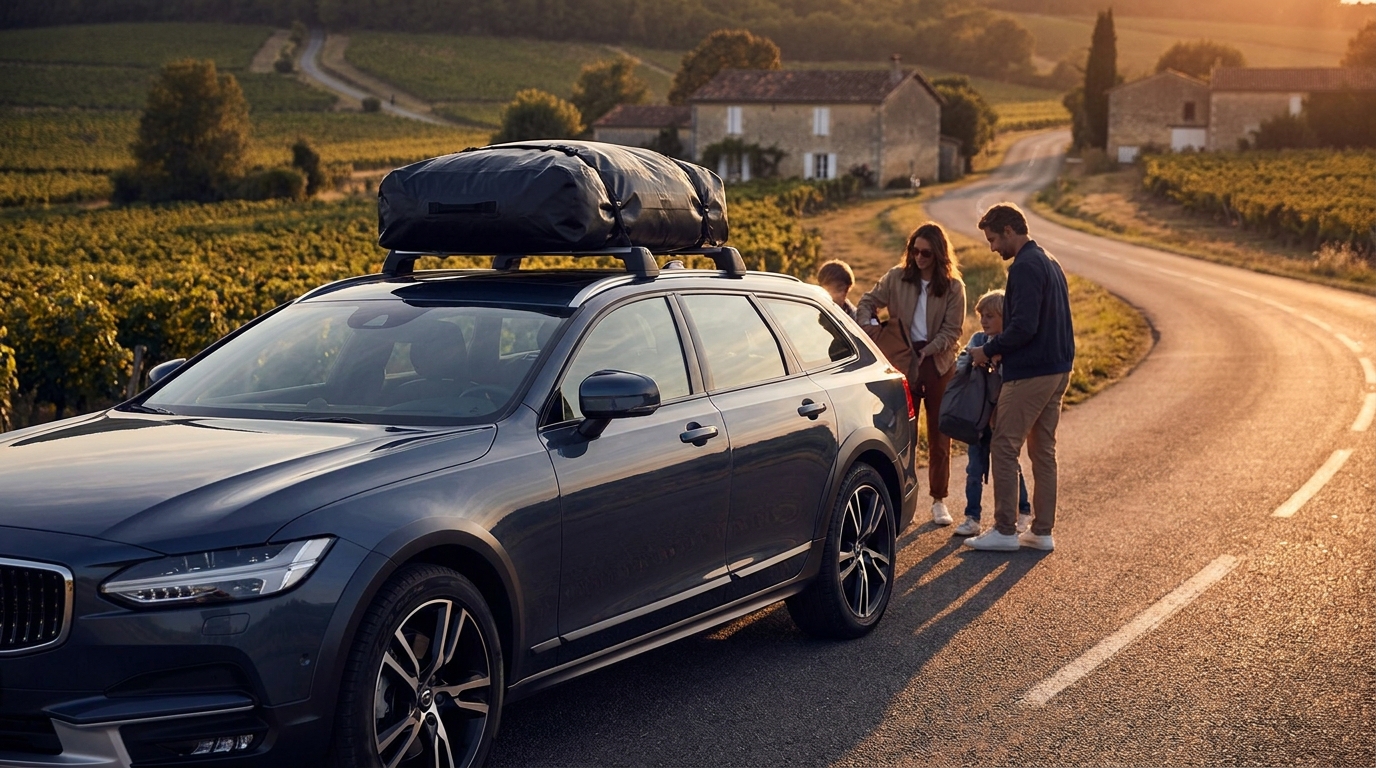
The soft roof bag has established itself as the simplest way to gain loading space without investing in a bulky hard box. Foldable once empty, waterproof when well designed, it fits most cars, with or without roof bars. The trick is choosing the right model for your vehicle and the type of trip (heading off on holiday, occasional transport, bulky kit).
To help you compare with confidence, here are the criteria that genuinely make a difference in use, followed by a selection of models available on Amazon. Prices are a guide, updated regularly, and may change.
Our selection at a glance
Three roof bag that stand out depending on your priority: the top-rated safe bet, the best value for money and the premium option.

Sac de toit voiture étanche 598L 1000D Nylon, 8 sangles renforcées, tapis antidérapant

Sac de toit 425-566 L imperméable, sans porte-bagages, tapis antidérapant et 6 sangles robustes (bleu, 566L)

Sac de toit imperméable 1132L, 2 sangles à cliquet, 10 sangles renforcées, 6 crochets de porte (SUV/van avec/sans barres, bleu)
How to choose: the criteria that matter
The capacity in litres suited to your need
Reckon on roughly 300 to 430L for a family's luggage on top of the boot, 500 to 600L for a big departure, and over 1000L for bulky kit or a long journey. There are models covering the whole range: Sailnovo 430L, Amazon Basics 425L, a 598L bag in 1000D, or even a giant 1132L model. An oversized bag poorly filled catches the wind: aim for the right size.
Real waterproofing: material and seams
This is the point that separates a good bag from a bad one. Go for a thick fabric such as 1000D Nylon (like the 598L waterproof bag) or coated PVC, with welded or heat-sealed seams rather than simply stitched, and a flap closure or protected double zip. Several models are billed as 100% waterproof: that's what to aim for to ride in the rain without finding your luggage soaked.
Fitting: with or without roof bars
Most soft bags attach to roof bars via their straps. But if your car doesn't have any, choose a model designed for fitting without bars, with hooks that grip the door frames: that's the case with the 540L bag for bar-free fitting, the 425-566L model needing no roof rack, or the large 1132L bag with door hooks. Always check compatibility with your vehicle.
Reinforced straps and the attachment system
A good bag multiplies the anchor points: 6, 8 straps or more, sometimes doubled (the Sailnovo 580L offers a 6+6 configuration). Ratchet straps (present on the 1132L bag) hold up better over time than simple tightening buckles. The more well-spaced attachments there are, the less the bag moves and flaps at speed.
The non-slip mat and roof protection
A non-slip mat slipped between the bag and the bodywork (supplied with the 598L bag, for example) stops the load sliding and protects the paint from rubbing. Without bars, it's almost essential. Failing that, provide a blanket or a protective mat.
Foldability and out-of-season storage
The major advantage over the hard box: once empty, the bag folds into a small package and stores in a cupboard or under a seat. The Sailnovo and Amazon Basics models are designed for this compact folding. If you only carry bulky loads a few times a year, it's a real space saving in the garage.
Soft bag or hard box?
The soft bag wins on price, weight, storage and versatility (bar-free fitting possible). The hard box stays ahead for aerodynamics, anti-theft and protection of fragile items. For occasional use and a controlled budget, the soft bag is often the best compromise; for very frequent motorway-speed trips, the hard box is more justified.
Comparison: roof bag
Here are a few of the most in-demand models on Amazon, chosen to cover the main uses: from the compact, well-finished bag to the very large capacity, with or without roof bars. Compare according to your car, your budget and how often you'll use it.
| Product | Rating | |
|---|---|---|
|
Best choice
Sac de toit voiture étanche 598L 1000D Nylon, 8 sangles renforcées, tapis antidérapant
|
4,4
4 099 reviews
|
View |
 Amazon Basics Amazon Basics Coffre de toit souple 425L imperméable, sac pliable pour véhicules avec barres, 8 sangles renforcées, housse incluse (noir)
|
4,0
7 815 reviews
|
View |
 Sailnovo Sailnovo Coffre de toit souple pliable étanche 430L, sangles renforcées/crochets de porte, tapis antidérapant (orange)
|
4,4
2 582 reviews
|
View |
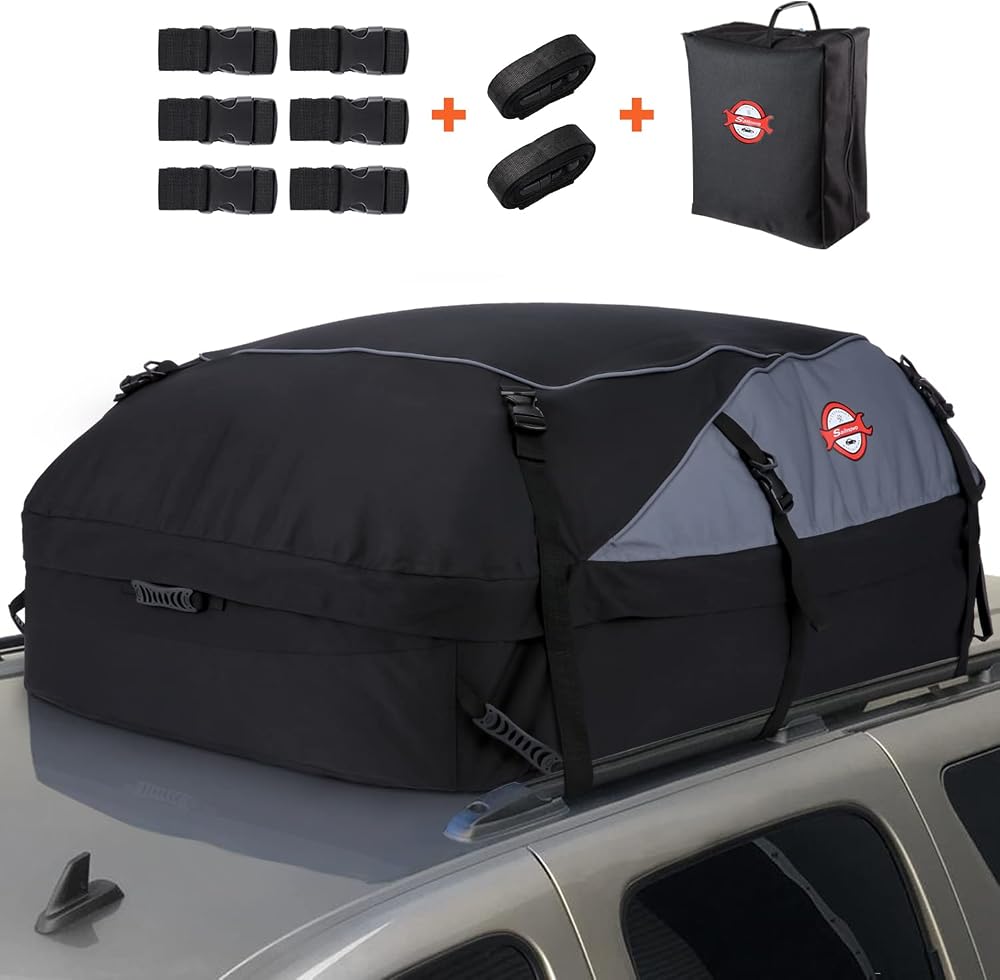 Sailnovo Sailnovo Sac de toit souple pliable 580L (20 cubes) pour voitures avec/sans barres, 6+6 sangles renforcées et sac de transport
|
4,4
2 582 reviews
|
View |
 Sac de toit voiture 540L (19 CU.Ft), coffre souple haute densité 100% imperméable, montage rapide sans barre, tapis inclus
|
4,4
920 reviews
|
View |
|
Sac de toit 425-566 L imperméable, sans porte-bagages, tapis antidérapant et 6 sangles robustes (bleu, 566L)
|
4,2
865 reviews
|
View |
 HandiWorld HandiWorld HandiHoldall grand coffre de toit souple 330L, pliable résistant aux intempéries avec base solide (bleu marine)
|
4,3
685 reviews
|
View |
|
Sac de toit imperméable 1132L, 2 sangles à cliquet, 10 sangles renforcées, 6 crochets de porte (SUV/van avec/sans barres, bleu)
|
4,4
580 reviews
|
View |
How to fit and use a roof bag day to day
A roof bag is forgiving to buy but unforgiving if you fit it carelessly, so a few minutes of care at the kerb pays off all the way to your destination. Begin by packing it on the ground, not on the roof. Distribute the weight evenly, keep hard or sharp items away from the fabric, and avoid overfilling: a bag stuffed into a dome catches far more wind than a neatly squared-off load. If the bag came with a non-slip mat, lay it on the roof first to protect the paint and stop the bag creeping.
Strapping is what keeps everything where it should be. Thread every strap the maker provides, pass them through the cabin or around the bars as instructed, and tighten them evenly so the bag sits square. Then check there is no slack anywhere before you set off.
- Re-check the strap tension after the first few miles, then at every stop, as fabric and straps settle under load.
- Close the bag fully and tuck the flap over the zip so rain can't track in.
- Keep heavy items low and central, and never exceed your roof's stated load limit.
- Leave the doors you've routed straps through unopened, or open them gently, to avoid trapping the webbing.
On the road, treat the loaded car as a different machine. The extra height and weight up top raise wind resistance, lengthen braking distances and make the car more sensitive to crosswinds and overtaking lorries, so ease off your usual pace and stay within the speed the bag's maker recommends. Listen for any new flapping or whistling, which usually means a strap has worked loose. Back home, dry the bag before folding it away, because packing it damp invites mildew and shortens its life. Treat it with this routine care and an inexpensive soft bag will see you through many holidays.
In summary
The best soft roof bag is the one that suits your car and your real use: a suitable capacity, serious waterproofing, a compatible fitting method (with or without bars) and well-spaced straps. For occasional family use, a 400 to 600L model that's properly waterproof covers most needs without breaking the bank. Remember to check the maximum permitted load on your vehicle's roof and to monitor the straps en route. Safe travels, and if something unexpected happens on the way, MyBootlid provides 24/7 roadside assistance.
Frequently asked questions
Yes, provided you choose a model designed for it. Aim for a thick fabric (1000D Nylon or coated PVC type), welded seams and a flap closure protecting the zip. Several bags are billed as 100% waterproof. By contrast, a budget model with simply stitched seams can let water in during heavy, prolonged rain.
Yes. Some models are specifically designed for fitting without bars: they use straps passed through the cabin and hooks gripping the door frames. That's the case, for example, with the 540L bag for bar-free fitting or the large 1132L model with door hooks. Check compatibility with your vehicle before buying.
To top up the boot of a saloon or an estate, 300 to 430L is often enough (Sailnovo 430L, Amazon Basics 425L). For a big departure with a lot of luggage, move up to 500 to 600L (598L bag, Sailnovo 580L). Beyond that, the 1000L and up models target bulky kit or long journeys. It's better to have a well-filled bag than a large bag half empty that catches the wind.
First respect the maximum speed stated by the bag's manufacturer and that of your roof bars. In practice, it's recommended to stay moderate (often around 110-120km/h) and adapt your driving: the load increases wind resistance, fuel consumption and braking distances. Check the strap tension after a few kilometres, then regularly during the journey.
The soft bag is lighter, cheaper, stores easily out of season and can be fitted without roof bars. The hard box offers better aerodynamics, increased protection and anti-theft locking, but costs more and takes up room in the garage. For occasional, economical use, the soft bag is often the right choice; for very frequent motorway trips, the hard box remains relevant.
It's best not to. Resting a loaded bag directly on the paintwork lets grit work between the fabric and the bodywork, and the constant movement at speed can scuff or scratch the roof. Most bar-free bags are designed to be used with a supplied non-slip mat or a protective layer, which both grips the bag and shields the paint. If your bag doesn't include one, a folded blanket or a dedicated protective mat does the job and is well worth the small effort.
Further reading
Roof Bag Price: How Much Does a Rooftop Cargo Bag Cost?
How much does a roof bag cost? UK price ranges for waterproof rooftop cargo bags, what affects the cost, and t…
Car equipmentBest Car Jump Starter: Comparison and Buying Guide
Which portable jump starter should you buy? We compare the best car battery boosters by power, engine compatib…
Car equipmentBest Bike Rack for Car: Comparison and Guide
Which bike rack should you choose? We compare the best towbar, boot-mounted and roof cycle carriers by load, e…
As an Amazon Associate, MyBootlid earns from qualifying purchases. Prices and availability shown are indicative and may change; only the price displayed on Amazon at the time of purchase applies.